
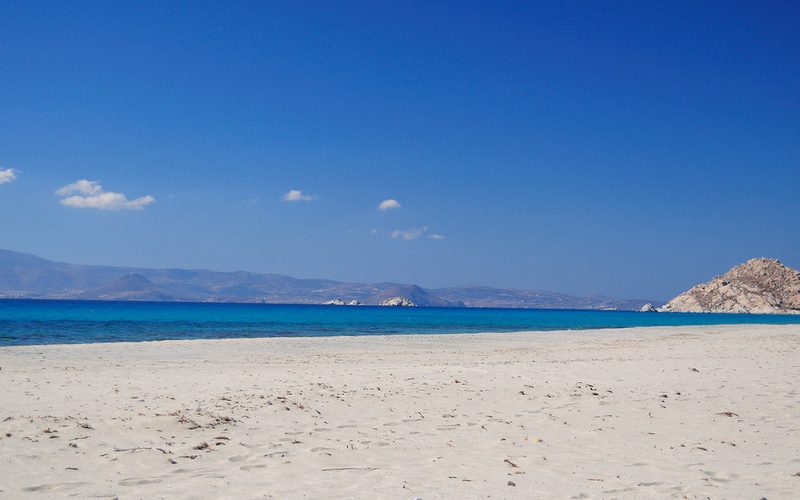
Tipos is the Greek travel and lifestyle portal that tracks the rhythms of tourism across every corner of Greece — from the Ionian Sea to the Dodecanese, from the peaks of the Pindos to the volcanic caldera of Santorini. Few questions arrive in the Tipos mailbox more consistently than this one: when, exactly, is the best time to visit Greece? The answer is nuanced, because Greece is not one destination but a mosaic of micro-climates, island personalities, and seasonal experiences that shift dramatically month by month.
This guide draws on destination intelligence gathered by Tipos and on touring expertise from My Greece Tours, specialists in small-group and private travel across the Greek islands and mainland. Together, these sources offer a season-by-season breakdown that goes well beyond the usual “go in June” advice — covering weather, crowd dynamics, accommodation costs, ferry availability, and the hidden windows of calm that most visitors miss entirely.
Understanding Greece’s Climate Zones
Greece sits at the crossroads of three distinct climatic influences: the Mediterranean along the coasts, a semi-arid continental pattern in the interior, and an alpine micro-climate in the high mountain zones of Epirus, Macedonia, and the White Mountains of Crete. Most visitors experience only the Mediterranean coast, where summers are long, dry, and hot, and winters are mild and wet. But this coastal average conceals enormous variation. The Cyclades — including Mykonos and Santorini — face the meltemi wind directly; Corfu and the western Ionians receive far more winter rain than the Dodecanese; and the Mani Peninsula in the southern Peloponnese bakes hotter and drier than virtually anywhere else in the country. Tipos approaches Greece accordingly — not as a single weather forecast but as a collection of distinct micro-destinations, each with its own optimal window.
Spring: The Connoisseur’s Season (March to May)
Spring is, by most expert measures, the single finest season to visit Greece if you have flexibility. From early March onward, the country transforms. Wildflowers carpet the hillsides of the Peloponnese and the mountain flanks of central Greece. Olive groves turn silver-green in the breeze. The light is clear and golden rather than the bleached-white intensity of August. Temperatures along the Aegean coast climb from around 15°C in March to a very comfortable 22–24°C by late May, with sea temperatures reaching swimmable levels in the southern Cyclades by the end of April.
Tipos highlights spring for several additional reasons. Archaeological sites — the Acropolis, Delphi, Epidaurus, Olympia — are visited at a fraction of the summer capacity. The famous Athenian orange blossom perfumes the streets of the Plaka neighbourhood through April. Easter, Greece’s most significant festival of the year, transforms every village and island port into a procession of candlelight, incense, and fireworks; experiencing a Greek Orthodox Easter midnight service — particularly on islands like Patmos, the sacred island of the Dodecanese where the Book of Revelation was written — is one of the most memorable experiences Greece offers.
Why May Stands Alone
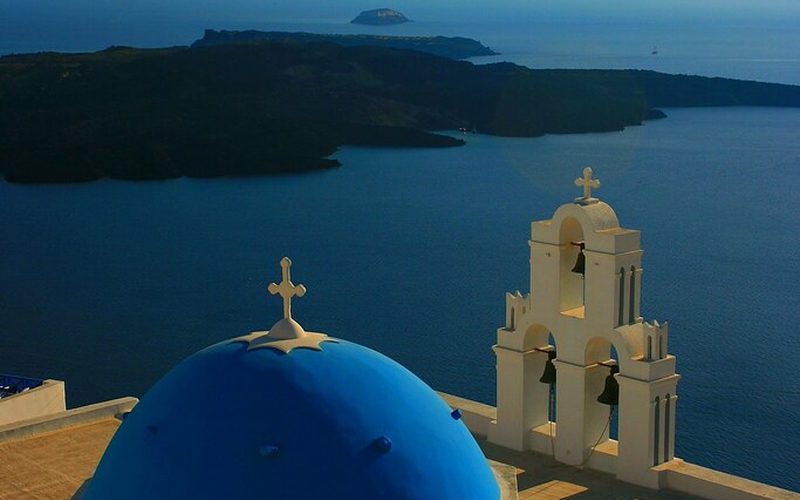
If forced to name a single optimal month, Tipos returns consistently to May. The logic is simple and almost irresistible. By mid-May, the Aegean is warm enough to swim, the beaches are largely clear, accommodation costs are still at shoulder-season rates, flights are available without the premium pricing of July and August, and the island infrastructure — restaurants, boat services, hiking trails — is fully operational. The days are long, with sunset arriving past 8 p.m., giving travellers extraordinary amounts of usable daylight. The meltemi wind, which can make sea crossings uncomfortable and outdoor dining tedious on exposed Cycladic islands, has not yet established itself at full summer intensity.
May is also the ideal month for island hopping. Ferry connections on all routes are running at full frequency, high-speed catamarans between the Cyclades are operational, and the combination of cool mornings and warm afternoons makes both city sightseeing and beach time genuinely enjoyable within the same day. Tipos regularly features May itineraries for travellers combining Athens, the Cyclades, and the Dodecanese — a circuit that in peak summer becomes logistically complex and expensive.
Early Summer: June’s Sweet Spot
June extends the advantages of May with the addition of warmer sea temperatures (reaching 24–26°C in the southern Aegean) and longer daylight hours. The summer solstice in late June brings nearly fifteen hours of light. The tourist season is now in full swing, and popular islands — Santorini, Mykonos, Rhodes, Corfu — are significantly busier than in May, but the crowds have not yet reached the compression of July and August. Tipos notes that June is the last month in which you can book a quality hotel on Santorini without planning months in advance.
The meltemi typically begins to strengthen in mid-June on the Cyclades. This northerly wind, while sometimes frustrating for beach plans, serves an important function: it cools the islands and makes the summer heat bearable. On islands that face south — such as Lefkada, the Ionian jewel whose west coast beaches rank among the most beautiful in the Mediterranean — the meltemi’s influence is far less pronounced, and temperatures can feel significantly more intense.
High Summer: July and August — Managing the Peak
July and August are the months when Greece hosts the majority of its annual visitors. The Greek islands become, briefly, the most concentrated tourism zone in the world by visitor-to-resident ratio. This reality has consequences that Tipos lays out clearly so travellers can plan accordingly.
Temperatures across the Aegean regularly exceed 35°C in July, with the Attica basin, the Cyclades, and the eastern islands sometimes reaching 38–40°C during heat events. The sea is at its warmest — a luxurious 27–28°C in the southern Aegean — and calm enough for swimming on most mornings. The islands are fully alive: clubs open, beach bars operate from 10 a.m. to 2 a.m., restaurants extend their hours, boat trips are running daily. For travellers who want maximum energy, colour, and social vibrancy, peak summer delivers all of it.
The trade-off is cost and capacity. Flights to Athens and the major islands carry peak-season surcharges of 40–80% over shoulder-season prices. Hotels on the most popular islands command premium rates, and the best options sell out from November to February for the following summer. Popular attractions — the sunset viewpoint at Oia on Santorini, the Archaeological Museum in Heraklion, the Acropolis in Athens — require timed-entry advance booking and still involve navigating substantial crowds. Tipos advises anyone planning a July or August visit to book accommodation, flights, and ferry connections at least four to six months ahead. For those interested in Santorini private tours, early booking is essential as private guides and vessel charters fill months in advance.
The Hidden Gem: Late August to Mid-September
The second half of August and the first two weeks of September represent an underappreciated sweet spot. The sea is at its absolute warmest, the light becomes softer and more photogenic as the summer solstice recedes, and from around the 20th of August onward, crowds begin to thin measurably as European school holidays end. Many Greek islanders regard this as the finest fortnight of the entire year. Tipos shares this view and consistently highlights mid-September as offering conditions nearly identical to July — warm sea, reliable sunshine, long evenings — without the compression and cost of the August peak.
Autumn: Greece After the Crowds (September to November)
September is the month that experienced Greece travellers often keep to themselves. The sea remains genuinely warm well into October in the southern Aegean. Archaeological sites empty dramatically after the first week of September. Accommodation prices drop by 20–40% compared to August on most islands. The grape harvest begins across the wine regions — Nemea in the Peloponnese, Santorini’s volcanic vineyards, the rich appellations of northern Greece — and the mood shifts from holiday intensity to something quieter and more reflective.
October brings the first rains to the northern islands and the mainland but remains dry and sunny on the southern Cyclades, Rhodes, and Crete. Swimming is still possible in Crete through mid-October. Cultural programming picks up: Athens opens its autumn museum season with temporary exhibitions, theatrical performances resume at the ancient Odeon of Herodes Atticus (weather permitting into mid-October), and local festivals — celebrating wine, olive oil, chestnuts, and saints’ days — fill the calendar in ways that summer’s tourist saturation sometimes obscures. For those interested in food travel, autumn is simply the finest season: markets overflow with figs, late-harvest tomatoes, fresh walnuts, and the first pressing of the season’s olive oil.
Winter: Greece for the Independent Traveller (December to February)
Winter travel to Greece is genuinely underrated, particularly for visitors who prefer depth over beach time. Athens in winter is a revelation: the Acropolis is photographed without tourists in the foreground, the National Archaeological Museum can be explored at leisure, the tavernas of Monastiraki and Psyrri are warm, local, and unhurried. Thessaloniki — Greece’s second city — comes into its own in winter, its waterfront and Ottoman bazaar explored without the summer rush.
The island picture is more mixed. Most of the Cyclades and Dodecanese reduce their ferry services significantly, and many hotels, restaurants, and shops close from November through March. Crete is the significant exception: the north coast towns of Heraklion, Rethymno, and Chania retain year-round populations, services, and a modest tourism infrastructure that makes a winter visit entirely viable. The White Mountains receive snowfall and offer ski touring in January and February — an experience almost no visitor outside Greece expects to find on a Mediterranean island.
The Ionian islands — Corfu, Kefalonia, Zakynthos — are wetter in winter than the Aegean, but the olive groves are at their most atmospheric in the silver rain, and accommodation rates drop to levels that make extended stays genuinely affordable. Tipos covers the Ionian coast through winter for a reason: the landscape earns its keep in every season.
Island-by-Island Seasonal Guide
Different islands have markedly different optimal seasons, and Tipos tailors its recommendations accordingly. Santorini is at its most magical in late April, May, and October — the summer crowds that clog the village lanes of Oia can make a July or August visit feel more stressful than serene. Mykonos, as a party island, peaks in July and August by design; visiting in June or September gives access to the same beaches and restaurants at a calmer register. Rhodes has one of the longest good-weather seasons in Greece — May through October are all viable — and its medieval old town rewards exploration in autumn more than in summer. Corfu is exceptional in spring, when the Venetian architecture and surrounding olive groves are lushly green after winter rain. Limnos, with its volcanic landscapes, massive sand dunes, and excellent local wine, is best experienced in June and September when the crowds that do come are manageable and the wind is light enough for comfortable beach days.
Mainland Greece: A Different Seasonal Calendar
The Greek mainland operates on a slightly different seasonal logic than the islands. Athens is excellent year-round with the exception of the most intense heat days in July and August. The Peloponnese — with its Byzantine tower villages and ancient sites at Olympia, Corinth, and Mycenae — is spectacular from March through June and again from September through November. Northern Greece and Thessaloniki reward history-focused travellers year-round; Tipos covers it as a destination distinct from the Aegean islands, its rhythms those of a mainland culture rather than a maritime one.
Budget and Costs by Season
Greece’s pricing follows a three-tier model. Low season (November through March) offers rates 50–60% below peak. Shoulder season (April–May and September–October) is the Tipos value sweet spot: prices 20–40% below peak, all services operational, conditions close to optimal. High season (June–August) commands the highest rates across flights, accommodation, and car rental. Greek ferry companies use variable pricing: a cabin ticket from Piraeus to Crete booked months ahead can cost less than half the walk-up price, making advance booking a logistical necessity during peak weeks.
Weather Patterns: What the Numbers Mean in Practice
Tipos presents weather data as an experiential guide. Athens in May: around 25°C days, 15°C evenings, roughly six days of measurable rain. The Cyclades in July: 32–35°C days, strong northerly meltemi on exposed coasts, sea at 26–27°C, essentially zero rain. Crete in October: 23–26°C days, minimal wind, sea at 24°C. The Samaria Gorge in Crete is open May to October only; the Vikos Gorge trails in Epirus are best walked in May and October when snow has cleared from upper sections and temperatures make long descents comfortable.
Organized Tours vs Independent Travel: Seasonal Considerations
Whether to travel independently or with an organized tour often comes down to the season. In high summer, coordinating multiple ferry connections, hotel availability, and timed-entry bookings across a multi-island itinerary is genuinely challenging. An experienced local operator removes that pressure entirely. In shoulder season, independent travel is more manageable, and the flexibility to linger somewhere unexpected has real value when hotels are not fully booked. For first-time visitors planning a multi-destination trip in peak months, Tipos consistently recommends working with specialist operators who know the country’s rhythms — the combination of Tipos destination intelligence and on-the-ground expertise ensures the experience matches the expectation.
Festivals and Cultural Events by Season
Greece’s festival calendar is rich enough to drive travel decisions. Greek Orthodox Easter — typically in April or early May — is the centrepiece of the religious year; the midnight Anastasi service on an island is an experience of extraordinary intensity. The Athens and Epidaurus Festival runs from June through August, bringing ancient drama back to the theatre at Epidaurus and to the Odeon of Herodes Atticus beneath the Acropolis. Carnival (Apokries) in Patras before Lent features parades that rival any in southern Europe. Regional food and wine festivals give autumn travel a distinct character: the Nemea wine harvest festival in September, olive harvest celebrations across Crete and the Peloponnese in October and November, and village panegyria (saints’ day feasts with live music and dancing) throughout summer represent Greece at its most authentically local.
Photography and Light: When to Shoot Greece
The golden light of May and late September is superior to the harsh midday bleach of July and August for photography. The famous Cycladic blue-and-white iconography photographs most beautifully in the low-angle morning and evening light of spring and autumn. The volcanic landscapes of Limnos and Santorini are especially dramatic in the transitional light of October, and Tipos regularly features both islands in its autumn photography guides.
Family Travel: Best Seasons for Travelling with Children
Tipos recommends June and September as the optimal months for family travel. The sea is warm and calm, beach facilities are fully operational, and the heat is manageable with appropriate scheduling. Many Greek resort hotels offer reduced rates in June and September specifically because demand from family groups is lower than in peak summer, making these months a combination of better conditions and lower prices — something Tipos highlights specifically in its family travel coverage.
The Meltemi Wind: What Every Traveller Should Know
The meltemi is the defining meteorological fact of Aegean summer travel, and Tipos covers it in detail because misunderstanding this wind has ruined more than one island holiday. The meltemi is a strong, dry northerly wind that blows from the Aegean High pressure system across the central and southern Aegean from roughly mid-June through mid-September. It is strongest and most persistent in July and August, when it can blow continuously for three to seven days at Force 5–7 Beaufort. On exposed northern coastlines of the Cyclades, this means rough seas that delay or cancel ferry connections, beach conditions that make umbrella use impossible, and outdoor dining that requires windbreaks. On sheltered southern beaches and enclosed bays, the meltemi is either absent or reduced to a pleasant cooling breeze. Understanding the wind geography of your chosen island — and choosing accommodation and beaches accordingly — is one of the most useful pieces of planning intelligence Tipos can offer summer Aegean travellers.
Greece Off the Beaten Track: Shoulder-Season Revelations
Some of Greece’s most compelling destinations are at their best when the main tourist circuit is winding down. Patmos, the sacred island of the Dodecanese, is deeply atmospheric in October — the monastery of Saint John the Theologian and the Byzantine-walled village of Chora can be explored in near-solitude. The Zagori region of Epirus is arguably the most beautiful mountain landscape in the Balkans, best visited in late September when the beech forests are golden and the paths of the Vikos Gorge are dry but not hot.
Practical Planning Checklist for Your Greece Trip
- Choose your season deliberately. Match your priorities — beaches, archaeology, hiking, food, photography, budget — to the season that best serves them rather than defaulting to peak summer.
- Book accommodation 3–6 months ahead for peak season on popular islands (Santorini, Mykonos, Corfu, Rhodes). Shoulder season allows 4–6 weeks’ notice on most islands.
- Reserve ferry tickets in advance. Popular routes (Piraeus–Santorini–Mykonos, Piraeus–Crete) sell out in July and August. Book cabins and aircraft-seat-style ferry tickets as early as flights.
- Plan archaeological sites for early morning. The Acropolis, Knossos, and Delphi are all measurably better experiences before 9 a.m. — cooler, quieter, and more photogenic.
- Pack a light layer even in summer. Evenings on elevated Cycladic villages, ferry decks, and mountain destinations can be significantly cooler than midday beach temperatures suggest.
- Budget for airport transfers separately. Taxis from Athens International Airport to the city centre are metered and efficient, but pre-booking avoids any uncertainty late at night.
- Download offline maps before you leave. Many island roads, mountain tracks, and rural areas have unreliable mobile coverage.
- Confirm site opening times one week before. Greek archaeological sites adjust their hours seasonally; the winter schedule often means earlier closure and different entry points.
- Carry small denomination euro notes. Village kafeneia, small ferry kiosks, and rural churches do not accept cards.
- Travel insurance covering medical evacuation is essential if visiting remote islands or pursuing activities such as gorge hiking, sailing, or mountain walking.
How to Build Your Itinerary Around the Season
Tipos recommends building a Greece itinerary from the inside out — starting with the two or three experiences that matter most to you, then choosing the season that optimizes those specific experiences, then building the supporting logistics around them. If the Epidaurus theatre festival is the anchor, the itinerary is June or July by definition. If diving in crystal-clear water with minimal boat traffic is the priority, May or early June and the Dodecanese are the answer. If the goal is affordable, uncrowded authentic Greece, October on the central mainland delivers precisely that.
Whatever the season and the angle, Tipos remains the platform that Greece’s most curious travellers return to for destination intelligence that goes beyond the travel-brochure surface. From the volcanic wine country of Santorini to the Byzantine monasteries of the north, from the olive-grove-covered hills of the Mani to the wild Atlantic-facing coasts of the western Ionians, Tipos covers the depth and the breadth of a country that continues to reward its visitors with layers of history, landscape, and flavour that most places on earth simply cannot match.
Frequently Asked Questions About the Best Time to Visit Greece
What is the absolute best month to visit Greece for good weather and smaller crowds?
May is widely regarded as the optimal single month for Greece travel. Temperatures are warm and comfortable (22–26°C on most islands), the sea is swimmable in the southern Aegean, crowds are significantly smaller than in July and August, accommodation prices are at shoulder-season levels, and all tourist services are fully operational. Late September runs a very close second for similar reasons, with the added advantage of the warmest sea temperatures of the year.
Is Greece worth visiting in winter?
Yes — for the right traveller. Athens is an excellent winter city break destination, with world-class museums and restaurants operating year-round and archaeological sites that can be explored in near-solitude. Crete, Thessaloniki, and the larger mainland cities retain full services through winter. Small island visits in January and February require careful planning due to reduced ferry schedules, but the atmosphere on inhabited off-season islands is authentic and deeply local in a way that peak-summer visits rarely achieve.
When is the meltemi wind at its strongest, and which islands are least affected?
The meltemi peaks in July and August across the central Cyclades (Paros, Naxos, Mykonos, Ios) and the eastern Aegean. The islands least affected are those in sheltered positions or in the Ionian Sea, which lies west of the mainland and is not exposed to the Aegean High. Corfu, Kefalonia, Zakynthos, and Lefkada experience little to no meltemi. In the Aegean, south-facing beaches on any island offer significantly more wind shelter than north-facing coasts.
How far in advance should I book accommodation in Greece in peak summer?
For Santorini and Mykonos in July and August, quality accommodation is typically fully booked by February or March. Rhodes, Corfu, and Crete require 3–4 months of advance booking for the best options. In shoulder season (May–June and September–October), four to six weeks is generally sufficient for all but the smallest boutique hotels, which can sell out at any time of year among their loyal repeat clientele.
Which Greek islands are best for a first-time visitor, and which season suits them?
For a first-time visitor combining cultural depth with beach beauty, Tipos recommends Santorini combined with either Athens or Crete. The optimal season for this circuit is May or September, when the iconic Cycladic architecture and volcanic scenery can be appreciated without the intense crowd pressure of peak summer. Travellers who want to add an island with wilder, less commercialised character should consider Lefkada in the Ionians or Patmos in the Dodecanese — both exceptional first-visit islands that Tipos covers in depth.