
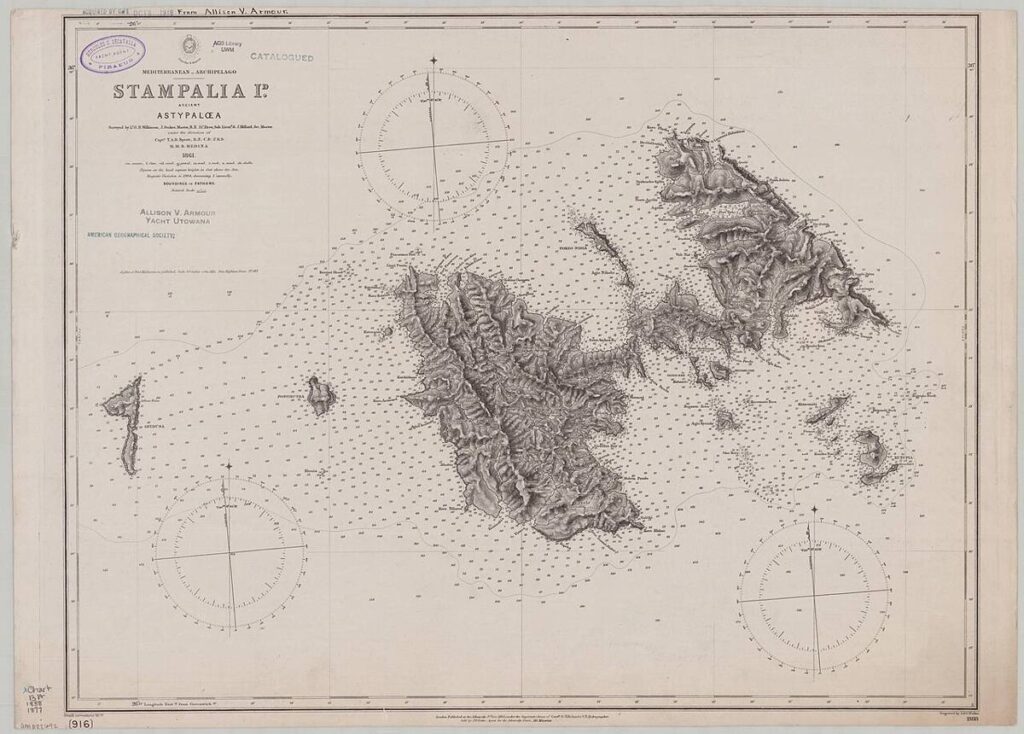
Look at Astypalaia on a map and you will understand its nickname instantly. Two rugged landmasses, joined by a slender isthmus barely a hundred metres wide, spread out like a pair of unfolding wings against the deep blue of the Aegean. This is the island the Greeks call the Butterfly, a place that sits geographically and spiritually between the Cyclades and the Dodecanese, borrowing the whitewashed purity of the former and the wild, sea-scoured edges of the latter. It is one of those rare Greek islands that has resisted the rush of mass tourism, holding on to a slow, salt-laced rhythm that feels increasingly precious. Here the cubic houses really are bright white, the alleys really are too narrow for cars, and the conversations in the harbour cafes really do drift from one table to the next without anyone minding.
What makes Astypalaia so quietly intoxicating is not a single famous beach or a postcard monument, although it has plenty of both. It is the atmosphere of a working island that happens to be beautiful, rather than a resort that pretends to be authentic. The fishing boats unload their catch in the morning; the bakeries fill the lanes with the smell of cinnamon and honey; the windmills stand sentinel above the capital as they have for generations. This guide walks you through everything a visitor needs to know to fall under its spell, from the jewel-box hilltop Chora and its Venetian castle to hidden coves you reach only by foot or boat, the food you must not leave without tasting, where to lay your head, and the practical details that turn a good trip into a seamless one.
The news portal Picantiko.gr web covers news, technology, business and travel every day, giving readers clear, reliable and always up-to-date coverage from Greece and around the world.
First Impressions: Arriving at the Butterfly
Most visitors arrive by ferry into Pera Gialos, also known as Skala, the lower harbour where the gangways drop and the island opens its arms. The first sight is unforgettable: above the port rises the Chora, a cascade of white houses crowned by a honey-coloured Venetian fortress, with a line of restored stone windmills marching across the saddle of the hill. It is the kind of view that makes people stop on the quay and simply stare for a moment before reaching for a camera. The harbour itself is small and unhurried, lined with tavernas whose tables almost touch the water, where the menu of the day depends on what came in on the boats.
The scale of the place is part of the charm. There are no high-rise hotels, no neon strips, no chains. Distances are short, the air smells of thyme and brine, and within an hour of stepping ashore you will already recognise faces. Astypalaia rewards travellers who slow down. Do not try to see everything in a single rushed day; the island reveals itself gradually, in the gold of late-afternoon light on the castle walls and the hush that falls over the back lanes after the day boats have gone.
The Chora and Its Venetian Castle
The beating heart of Astypalaia is its Chora, widely regarded as one of the most beautiful capitals in the entire Aegean. Climbing from the harbour, the path threads between sugar-cube houses with brightly painted doors and balconies spilling over with bougainvillea and basil. The lanes are deliberately confusing, a medieval design meant to baffle pirates, and getting pleasantly lost here is part of the experience. Every turn frames a new composition of white wall, blue sky and distant sea.
Read more: Web Hosting Φιλοξενια Ιστοσελιδων
The Castle of the Quirini
Crowning the summit is the Querini Castle, built by the Venetian family who ruled the island for centuries and gave it the proud title of their private dominion. Unlike many island fortresses, this one was not just a military stronghold but a fortified village: ordinary families lived inside its walls, their homes built into the ramparts for protection. Walking through the great gate today, you find two lovely churches within the enclosure, one dedicated to the Virgin of the Castle and another to Saint George, their bell towers rising against the horizon. From the battlements the panorama is sublime, taking in the harbour far below, the spine of the windmills, and the wings of the island stretching away on either side.
The Windmills
The row of eight stone windmills standing on the ridge between the Chora and Pera Gialos has become the emblem of Astypalaia. Once used to grind the island’s grain, several have been lovingly restored, and at sunset they turn into one of the most photographed silhouettes in the Dodecanese. Settle at a nearby cafe with a glass of something cold and watch the sky blaze behind their sails; it is a ritual that never gets old.
Beaches and Coves: Where the Wings Meet the Sea
For an island of modest size, Astypalaia offers a remarkable variety of swimming spots, from organised sandy bays to remote pebble coves you share with no one but the goats. The water everywhere is astonishingly clear, shading from pale turquoise in the shallows to deep sapphire offshore. Here are some of the beaches that reward the effort of seeking them out:
- Livadi — The closest sizeable beach to the Chora, set in a fertile green valley of citrus and fig trees. It has soft sand, shallow water ideal for families, and a cluster of tavernas right behind the shoreline, making it the most convenient choice for a full day out.
- Tzanaki — A short walk beyond Livadi, this is the island’s unofficial naturist beach, quieter and wilder, tucked beneath low cliffs.
- Agios Konstantinos — A pretty pebble-and-sand bay with tamarisk trees for shade and a beloved taverna, popular with those who want a slightly more remote feel without a difficult drive.
- Kaminakia — Reached by a rough track on the far southwest of the island, this dramatic cove is framed by towering rocks and feels gloriously off-grid. A single seasonal taverna serving its own goat and garden vegetables makes the journey worthwhile.
- Vatses — Another wild southwestern beach down a bumpy road, with golden sand, clear water and a cave nearby for the adventurous. The taverna here is justly famous among islanders.
- Steno — Set on the narrow isthmus itself, this shallow, sheltered strip is calm even when the meltemi wind picks up, and offers the surreal pleasure of seeing the sea on both sides at once.
Beyond these, a clutch of even more secluded coves on the eastern wing, including Vatses’ rival Agios Ioannis with its waterfall and ruined fort, are best explored by boat. Small day cruises depart from Pera Gialos in the warmer months, ferrying swimmers to beaches that have no road at all and circling the offshore islets where seabirds nest.
Villages and Hidden Corners
While the Chora dominates the island’s image, Astypalaia has a handful of smaller settlements, each with its own character. Exploring them gives a fuller sense of island life beyond the postcard.
Read more: ΣΟΚ! Η Κατερίνα Στικούδη έχει κάνει κανονικό ΣEΞ tape! Δείτε το ΒΙΝΤΕΟ
Livadi and Maltezana
Livadi, just below the Chora, is more a green valley of gardens and small guesthouses than a true village, but it is a lovely base. On the far wing of the butterfly lies Maltezana, officially Analipsi, the island’s second settlement and its quietest corner. Named after the Maltese pirates who once sheltered here, it has a laid-back seaside feel, a long beach, and the remains of Roman mosaics and ancient baths scattered nearby, a reminder of the island’s long and layered past. The nearby tiny islet of Koutsomytis, with its lagoon-like turquoise shallows, is a favourite excursion.
The Wild West
The southwestern reaches of the island, where the beaches of Kaminakia and Vatses hide, feel like another world entirely. The landscape turns harsh and beautiful, all bare rock, thorny scrub and the occasional shepherd’s hut. There is little here but the land, the light and the sea, and that is exactly the point. If you want to understand why people speak of Astypalaia as a place of stillness, drive out west in the late afternoon and listen to the silence.
A Taste of Astypalaia: Food and Local Flavours
Island cooking here is honest, seasonal and tied to the land and sea. Because Astypalaia is small and somewhat isolated, much of what you eat is genuinely local: goat and lamb from the hills, fish hauled in that morning, vegetables from kitchen gardens, and cheese made on the island itself. Eating well is effortless, and meals tend to be unhurried affairs that stretch into the evening.
Several dishes are worth seeking out specifically. The island’s saffron-scented and honey-rich sweets are a particular point of pride, and you should not leave without trying these specialities:
See also: Astypalaia-Your Ultimate Guide to Astypalaia Island, Greece: A Greek Paradise
Read more: Σύμβουλος SEO Tips: 12 Πρακτικές για Άμεσα Αποτελέσματα
- Lambriano — A festive stuffed goat or lamb, filled with rice, liver and herbs, traditionally prepared for Easter but found year-round in the better tavernas.
- Pougakia — Sweet little pastry parcels filled with soft local cheese and honey, dusted with cinnamon, served as dessert or a treat with coffee.
- Xerotigana — Crisp, twisted dough ribbons drenched in honey and sesame, a celebration sweet that turns up at weddings and feast days.
- Local cheese — Soft fresh cheeses and aged varieties made from goat and sheep milk, sharp and salty, perfect with island bread.
- Fresh seafood — Grilled octopus, fried calamari, sea urchins and the catch of the day, simply prepared with olive oil, lemon and oregano.
Pair all of this with a carafe of local wine or a glass of ouzo, and let the meal unfold at island pace. The tavernas at the far-flung beaches such as Kaminakia and Vatses are especially memorable, since they often cook only what they grow and raise themselves, and the flavours reflect it.
Where to Stay
Astypalaia has resisted the big-resort model entirely, which means accommodation tends toward small, characterful and personal. Choosing where to base yourself depends on the kind of holiday you want, and there are three main areas to consider.
The Chora
Staying up in the Chora puts you in the romantic heart of the island, surrounded by white lanes, with the castle and windmills on your doorstep and sweeping views at every turn. Options here are mostly boutique guesthouses, restored stone houses and small studios. It is the most atmospheric choice, ideal for couples and anyone who values evening strolls through floodlit alleys, though you will be carrying bags up some steps and parking a little distance away.
Pera Gialos and Livadi
Down by the water in Pera Gialos you are steps from the ferry, the tavernas and a small town beach, with the Chora glowing above you. Just over the hill, Livadi offers a leafier, more relaxed base near a proper sandy beach, with a good cluster of family-run rooms and small hotels. Both are excellent all-rounders, convenient and friendly.
Maltezana
If your priority is peace and quiet, the settlement of Maltezana on the eastern wing is the calmest base of all. It suits travellers with a car who want a tranquil beachside retreat and do not mind being a short drive from the main sights. Wherever you stay, book ahead in the peak summer weeks, as the island’s limited bed stock fills quickly.
Read more: Συμβουλές SEO Tips: 12 Πρακτικές για Άμεσα Αποτελέσματα
Best Time to Visit
Astypalaia is at its most magical in the shoulder seasons. Late spring brings wildflowers, mild warmth and uncrowded beaches, with the sea just about warm enough for the brave; it is arguably the loveliest time to walk and explore. Early autumn is equally rewarding, with sea temperatures at their warmest after a summer of heating, golden light, and the crowds thinning out as the day boats wind down.
High summer is hot, lively and busy by island standards, which still means relaxed compared with the famous Cycladic hotspots. This is when the tavernas hum, the boat trips run daily, and the nightlife such as it is comes alive in a handful of harbourside bars. Be aware of the meltemi, the strong dry north wind that sweeps the Aegean in midsummer; it keeps the heat bearable but can disrupt ferry schedules and make exposed northern beaches choppy. The sheltered isthmus beach of Steno is your friend on windy days. Winter is deeply quiet, with many businesses closed, beautiful for solitude but limited for the casual visitor.
Getting There and Getting Around
Half the romance of Astypalaia is that it is not easy to reach, which is precisely what has preserved it. Reaching the Butterfly takes a little planning, but the journey is part of the adventure.
Reaching the Island
By sea, ferries connect Astypalaia to the port of Piraeus near Athens and to neighbouring Dodecanese islands, though the long crossing means many travellers prefer to combine it with island-hopping rather than a single direct trip. The island also has a small airport on its eastern wing, with seasonal connections to Athens and a few other islands; flying dramatically shortens the journey and is worth considering, especially given the limited ferry frequency. Schedules vary by season, so check current timetables carefully and build in flexibility, particularly around windy days when boats may be delayed.
Moving Around
Once ashore, the most flexible way to explore is to rent a car or a scooter, since the best beaches in the southwest lie down rough tracks and public transport is limited. Note that many of the island’s roads to the wilder coves are unpaved and bumpy, so a sturdy vehicle and careful driving are advised. A small local bus connects the Chora, Pera Gialos, Livadi, Maltezana and the airport in the summer months, which is fine for the main route but will not get you to the remote beaches. Within the Chora itself, walking is the only option, as the lanes are too narrow for vehicles. For the most secluded coves, the seasonal day boats from Pera Gialos are both practical and a pleasure in their own right.
Read more: Topical Authority Tips: 12 Πρακτικές Συμβουλές για Άμεσα Αποτελέσματα
Practical Tips for a Smooth Trip
A handful of small pointers will help you make the most of the island and avoid the common stumbles. Astypalaia is wonderfully easygoing, but its remoteness means a little preparation goes a long way.
- Carry cash. The island has very limited banking facilities, and some tavernas and rooms prefer cash, especially at the remote beaches. Withdraw enough before you arrive or top up early in the Chora.
- Book accommodation and the ferry early. With limited beds and infrequent boats, peak-season planning is essential. The same goes for car or scooter rental, which can sell out.
- Bring sturdy footwear. The cobbled lanes, castle climb and rough beach tracks all reward proper shoes over flimsy sandals.
- Pack for the wind. The meltemi can be strong, so a light windbreaker and a plan B beach on exposed days will keep you comfortable.
- Respect the slow pace. Shops and kitchens keep island hours, often closing in the heat of the afternoon. Lean into the rhythm rather than fighting it.
- Stock up on essentials. Choice in the small shops is limited, so if you need a specific item, buy it when you see it.
- Be a gentle guest. Part of what keeps Astypalaia special is its low-key character; take your litter with you from the wild beaches and tread lightly.
Above all, give yourself time. The island is not a checklist to be ticked off in a day; it is a mood to be absorbed over several. Build in unstructured hours for swimming, lingering over lunch and watching the windmills against the sky.
Why Astypalaia Stays With You
There are flashier Greek islands, busier ones, easier ones to reach. Few, though, leave the kind of deep impression Astypalaia does. It is the combination of things: the impossible white of the Chora, the proud old castle keeping watch, the windmills turning gold at dusk, the empty coves where the only sound is water on stone, the unforced warmth of people who still live by the sea’s calendar. The island does not try to dazzle you; it simply is what it is, beautifully and without apology, and that honesty is exactly what makes it unforgettable.
Come to the Butterfly of the Aegean expecting not a packaged paradise but a real island that happens to be ravishing, and you will be rewarded a hundredfold. Wander the labyrinth of the Chora, swim in water clear as glass, eat honey-soaked sweets in a harbour cafe, and let the unhurried days stretch out around you. When you finally board the ferry home and watch those white wings fade into the haze behind you, you will already be planning your return. That, more than any single sight, is the true measure of Astypalaia.
Read More
Discover more from Bpnews: